



80D- Key deduction for good financial planning
 Print
PrintListen to this Article
-
80D- Key deduction for good financial planning (For Beginners like me)
-
(A) 80C+80CCD+80CCE V/s 80D
-
* When it comes to financial planning the first thing that strikes in our mind is 80C deductions like PPF, NSC , Tax saver F.D. or L.I.P. The main reason for that is the large amount involved with 80C deduction i.e. Rs 100000 (now1.20 Lac with the introduction of Infrastructure bonds) and therefore we somehow neglect an another very important aspect i.e. Medical Insurance.
*I am not saying that people don't take medical insurance but according to me they don't have complete knowledge about it. They take it just to satisfy themselves that yes we have a medical cover. But in reality they don't able to take full advantage of this key investment neither in tax planning nor in terms of claim nor in insurance cover.
*I will deal with the details of Sec. 80 D in this part and essentials of good Medical/Health insurance plan in next part.
-
(B) Important points related with 80D
-
(1) Eligibility - Individual and H.U.F.(2)Individual V/s H.U.F. -
In case an individual, the medical insurance policy can be taken in the name of any of the following: the taxpayer or the spouse, parents or dependent children of the taxpayer.
- In case a HUF , the medical insurance policy can be taken in the name of any member of the family.
- (3) Mode of Payment - Any mode other than cash
- (4) Scope - Health Insurance Premium paid under a scheme framed by any other insurer and approved by the Insurance Regulatory & Development Authority (IRDA).
-
Some of the companies approved by IRDA are :-
-
 New India Assurance
United India Insurance ICICI Lombard Tata AIG Royal Sundaram Star Allied Health Insurance Cholamandalam DBS Bajaj Allianz Apollo
New India Assurance
United India Insurance ICICI Lombard Tata AIG Royal Sundaram Star Allied Health Insurance Cholamandalam DBS Bajaj Allianz Apollo -
-
(C) Inclusion V/s Exclusion
-
* Children above 18 years, if employed, can not be covered.
-
* Male children, if not employed, but a bonafide student can be covered upto age of 25 years.
- * Female children, if not employed, can be covered until the time she is married.
- * Parents need not to be dependent on the Assessee.
- * Parents of Individual or Spouse both are covered.
- (D) Amount of Deduction
- Individual - Well two types of deduction is provided to him . One his on the premium paid for the medical cover of himself,spouse and children and an additional deduction on payment of premium for parents (both dependents and non-dependents)
- Basic - 15000 + 5000 (extra if anyone is senior citizen)
- Additional - for medicalim policy of parents 15000 + 5000 extra (if they are senior citizen)
INSERT (AY 2008-09)
Additional deduction of15,000 under Section 80D is allowed to an individual who pays medical insurance premium for his/ her parent or parents.(E) Why deduction U/s 80 D is granted ??
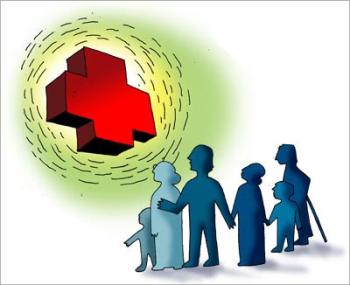
In case of a sudden illness or accident, the health insurance policy takes care of the hospitalization, medical and other costs incurred.. So govt. wants us to take this seriously and that's why it has included Sec. 80 D in I.Tax Act
With this I conclude my article and hopefully I have answered all the important question related to Sec. 80D.
Source - 80 % of this article is my own write-up along with headings and phrases used. Rest 20% of the technical part is the result of research with the help of I.tax websites.
My next part will deal with essentials of good Medical/Health insurance plan
Regards
Pulkit Gupta
-
(C) Inclusion V/s Exclusion
Category : Income Tax | Comments : 0 | Hits : 468
Income Tax Alert - Here Are 5 High-Value Transactions That May Come Under Scrutiny. Large Cash Deposits: Any cash deposit exceeding Rs 10 lakh in a financial year across savings accounts draws the attention of the income tax department. Even if deposits are spread across multiple accounts, the cumulative amount beyond the threshold triggers scrutiny. Fixed Deposits: Surpassing the Rs 10-lakh limit in fixed deposits within a financial year prompts inquiries regarding the source of f...
Delhi Court Sentences Woman to 6 months Jail for not filing the return of income (ITR) discussed. Accordingly, the accused is held guilty of not filing the return of income for the assessment year 2014-15 under Section 276CC of The Act. Accordingly, the accused is convicted for an offence punishable under Section 276CC of the Act," the court said in the judgement. "The convict is awarded a sentence of simple imprisonment for six months with a fine of Rs 5,000 and in default to unde...
Corporates, Non-corporates or government department all are procuring major part of services or goods from the MSMEs. There are provision under the Micro, Small, and Medium Enterprises Development (MSMED) Act, to ensure that businesses make payments to MSMEs within a specified time frame, and failure to which can impact the deduction claims for such payments. To facilitate timely payments to micro, small, and medium enterprises (MSMEs) and address the challenges faced by these businesses in rec...
In the Income tax act, the words “Turnover”, “Gross receipts” and Sales are used at many places. In the common business parlance, the terms sales and turnover are used interchangeably. However, as per Income Tax law, guidelines are available on the question of what constitutes turnover. Understanding the concepts of these words is necessary for the purpose of the tax audit. An audit is mandatory for corporate assessees, irrespective of the amount of turnover. In ...
Very Important Income Tax Update regarding Micro and Small Enterprises Section 43B-any amount remains unpaid on year end to creditors, being micro/small entity, beyond 45 days or less, as agreed or 15 days if no agmt, shall be added to taxable Income resulting in huge additional tax liability. Keeping such creditors unpaid is risky. If payment for purchases made from *Micro and Small units* remains outstanding on 31st March, there may be huge tax liability. Therefore...





Comments