




Entities identified on basis of risk parameters to face GST Audit
 Print
PrintListen to this Article
0:00
0:00
The revenue department has come out with a plan to audit accounts of GST registered businesses based on risk parameters, which may include history of tax evasion, irregular filing of returns and employing "questionable accountants". Unveiling the audit plan, the Directorate General of Audit (Indirect Taxes) said the analytics arm of CBIC would generate a list of GST payers with risk scores and share it with audit commissionerates for scrutiny.
The taxpayers identified as "risky" would be divided into 3 categories -- small (with a turnover of up to Rs 10 crore), medium (Rs 10-40 crore) and large (above Rs 40 crore).
The audit would be conducted on the basis of annual returns filed for 2017-18 fiscal -- the first year of the GST implementation.
Goods and Services Tax (GST) was implemented on July 1, 2017. The last date for filing annual returns for 2017-18 is August 31, 2019.
This audit plan would apply to entities who fall in the jurisdiction of Central GST (CGST) officers.
To ensure non-intrusive scrutiny of tax returns, the DG Audit has asked the Chief Commissioners of GST and central excise to opt for "desk-based (office) audit" in case of small category of taxpayers, as against the current system of "premises-based audit".
It said that "premises-based audit" should be carried out with the approval of Commissioner in cases where small taxpayers refuse to cooperate or there are inherent weaknesses in the internal control system of the taxpayer.
It further said "premises-based audit" should be conducted in case of large and medium category of taxpayers.
Some of the parameters for providing risk scores to an entity include delay in furnishing documents sought by the taxmen, size of exemptions availed, entities involved in high risk sectors like restaurants, hotels, car rentals, vehicle spare parts, retail and telecom.
Also, the quality of the taxpayer's books and records and if the returns have been prepared by "questionable accountants" would be considered, it added.
The risk parameters would also include taxpayers who have not been audited in the pre-GST era for 4-5 years and also those whose turnover have substantially increased after GST roll out.
In case non-compliance of law is noticed with respect to erstwhile central excise or service tax during the course of GST audit, the audit commissioner may take suitable action.
"The audit commissionerates should also be advised that the audits should be conducted in such a manner so as to cause least inconvenience to the taxpayer. There should not be any disruption in the conduct of business by the taxpayer," the DG Audit said.
It has also said that special care should be taken to minimise the litigation with regard to bona-fide mistakes noticed during the audit.
It further said that audit of large units would have to completed within 7 working days, medium (5 working days) and small units (3 working days). #casansaar (Source - PTI, MoneyControl)
The taxpayers identified as "risky" would be divided into 3 categories -- small (with a turnover of up to Rs 10 crore), medium (Rs 10-40 crore) and large (above Rs 40 crore).
The audit would be conducted on the basis of annual returns filed for 2017-18 fiscal -- the first year of the GST implementation.
Goods and Services Tax (GST) was implemented on July 1, 2017. The last date for filing annual returns for 2017-18 is August 31, 2019.
This audit plan would apply to entities who fall in the jurisdiction of Central GST (CGST) officers.
To ensure non-intrusive scrutiny of tax returns, the DG Audit has asked the Chief Commissioners of GST and central excise to opt for "desk-based (office) audit" in case of small category of taxpayers, as against the current system of "premises-based audit".
It said that "premises-based audit" should be carried out with the approval of Commissioner in cases where small taxpayers refuse to cooperate or there are inherent weaknesses in the internal control system of the taxpayer.
It further said "premises-based audit" should be conducted in case of large and medium category of taxpayers.
Some of the parameters for providing risk scores to an entity include delay in furnishing documents sought by the taxmen, size of exemptions availed, entities involved in high risk sectors like restaurants, hotels, car rentals, vehicle spare parts, retail and telecom.
Also, the quality of the taxpayer's books and records and if the returns have been prepared by "questionable accountants" would be considered, it added.
The risk parameters would also include taxpayers who have not been audited in the pre-GST era for 4-5 years and also those whose turnover have substantially increased after GST roll out.
In case non-compliance of law is noticed with respect to erstwhile central excise or service tax during the course of GST audit, the audit commissioner may take suitable action.
"The audit commissionerates should also be advised that the audits should be conducted in such a manner so as to cause least inconvenience to the taxpayer. There should not be any disruption in the conduct of business by the taxpayer," the DG Audit said.
It has also said that special care should be taken to minimise the litigation with regard to bona-fide mistakes noticed during the audit.
It further said that audit of large units would have to completed within 7 working days, medium (5 working days) and small units (3 working days). #casansaar (Source - PTI, MoneyControl)
Category : GST | Comments : 0 | Hits : 685
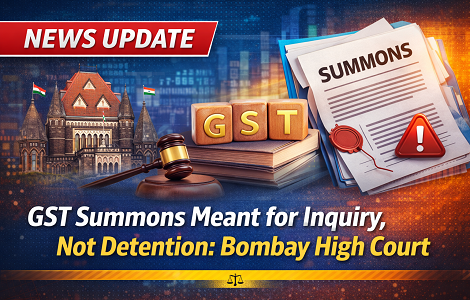
In a significant judgment, the Bombay High Court has clarified that summons issued under the Central Goods and Services Tax (CGST) Act are meant strictly for inquiry and recording of statements, and c...
Please click on the link below to view the gross and net GST revenue collections for the month of Jan, 2026. https://tutorial.gst.gov.in/downloads/news/final_approved_monthly_gst_data_for_pub...
Jan 23rd, 2026 An advisory on reporting of taxable value and tax liability under RSP-based valuation in e-Invoice, e-Way Bill and GSTR-1 / GSTR-1A / IFF has been issued for the information ...









Comments