 CA Sansaar


Strengthening Transparency and Trade Compliance
 Print
PrintCourt : Customs duty
Brief :
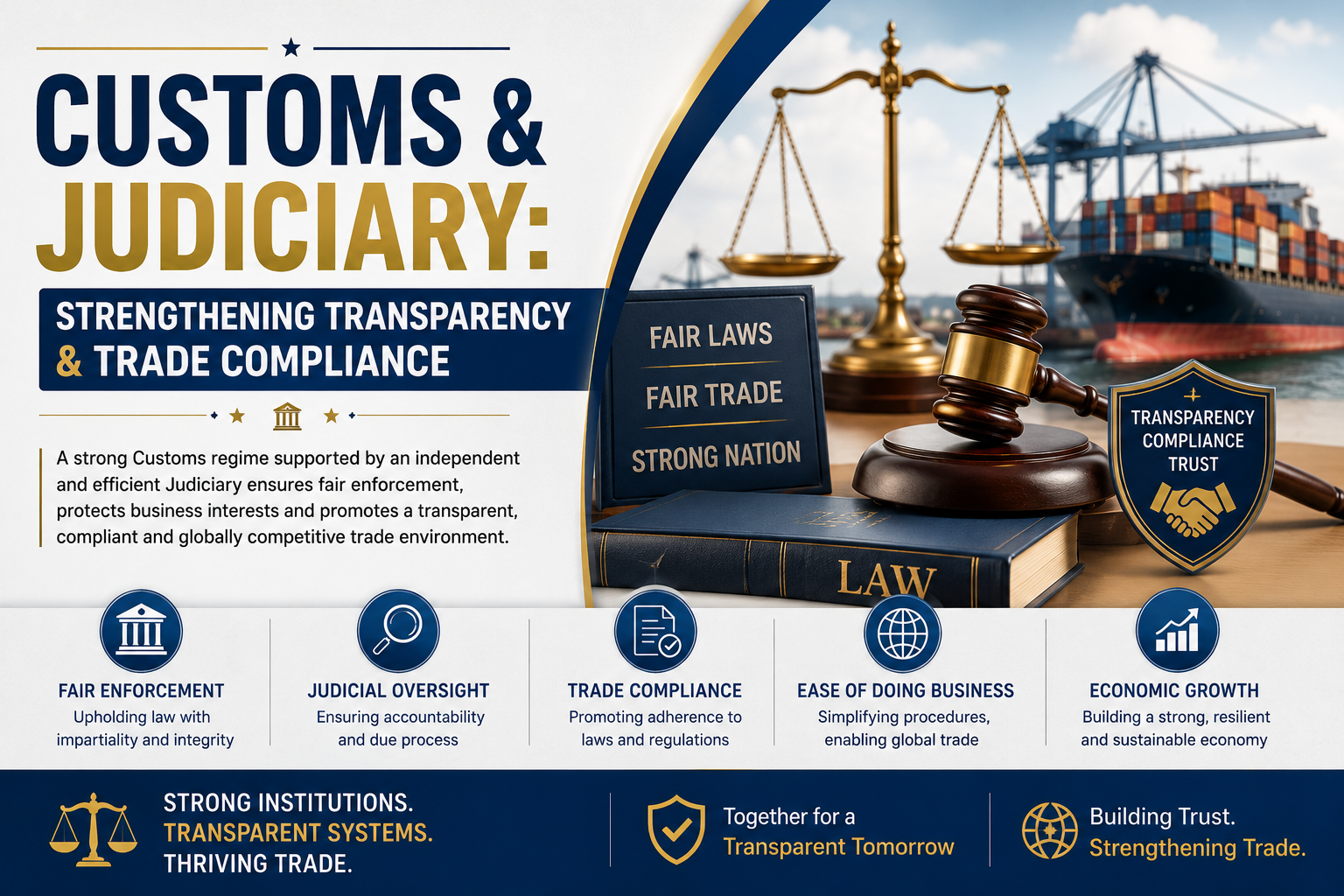
The judiciary plays a significant role in ensuring transparency, accountability, and fairness in customs administration and international trade practices. Through legal oversight and dispute resolution, courts and tribunals help maintain a balanced system between government regulations and taxpayer rights.
Customs laws are essential for regulating imports and exports, preventing illegal trade activities, and ensuring proper revenue collection. Judicial institutions support these objectives by interpreting customs laws, resolving trade disputes, and ensuring lawful enforcement of regulations.
With the introduction of digital customs systems, faceless assessments, and online compliance procedures, transparency in trade operations has improved considerably. Judicial support for fair procedures and timely dispute resolution further strengthens business confidence and promotes ease of doing business.
A strong customs and judicial framework ultimately contributes to economic growth, secure trade practices, and a transparent regulatory environment for businesses and individuals.
Citation : (2000) 1 SCC 315
Judgement :
Important Judiciary Judgments on Customs & Trade Compliance
Judicial decisions play a vital role in strengthening transparency, accountability, and compliance within customs administration and international trade. Courts and tribunals regularly interpret customs laws to ensure fair treatment of businesses while protecting government revenue and national economic interests.
Below are some significant judicial principles and landmark judgments related to customs and trade compliance:
1. Principle of Natural Justice in Customs Proceedings
Indian courts have repeatedly held that customs authorities must follow the principles of natural justice before imposing penalties, confiscation, or duty demands.
Key Judicial Observation:
- Every taxpayer or importer must receive:
- Proper notice
- Opportunity of hearing
- Fair adjudication process
This strengthens transparency and prevents arbitrary actions by authorities.
2. Transparency in Faceless Assessment
Courts have emphasized that digital and faceless customs assessments should maintain procedural fairness and proper communication with importers.
Judicial Importance:
- Clear documentation
- Reasoned orders
- Transparent assessment procedures
- Timely grievance redressal
These measures improve trust in digital customs systems.
3. Classification & Valuation Disputes
Several customs disputes arise regarding:
- Product classification
- Import valuation
- Applicable duty rates
Judiciary has clarified that authorities must rely on:
- Genuine transaction value
- Proper evidence
- Consistent legal interpretation
This protects businesses from excessive or incorrect duty demands.
4. Trade Facilitation & Ease of Doing Business
Courts have supported reforms aimed at:
- Faster customs clearance
- Reduced procedural delays
- Simplified compliance mechanisms
- Digitization of trade documentation
Judicial support for trade facilitation encourages foreign investment and international business growth.
5. Protection Against Arbitrary Penalties
The judiciary has consistently ruled that penalties under customs law should only be imposed when there is:
- Intentional misdeclaration
- Fraudulent conduct
- Deliberate violation of law
Minor procedural errors without mala fide intention should not attract harsh penalties.
Impact of Judicial Oversight on Customs Administration
Judicial intervention helps:
Improve accountability
Ensure lawful enforcement
Protect taxpayer rights
Promote transparent governance
Strengthen investor confidence
Conclusion
The judiciary acts as a guardian of fairness and transparency in customs administration. Through landmark rulings and legal interpretation, courts continue to strengthen trade compliance, protect business interests, and support a transparent and efficient customs ecosystem.
A balanced relationship between customs authorities and judicial oversight is essential for promoting economic growth, lawful trade practices, and ease of doing business in India.







Comments