





How to Claim GST Refund in India: Complete Step-by-Step Guide
 Print
Print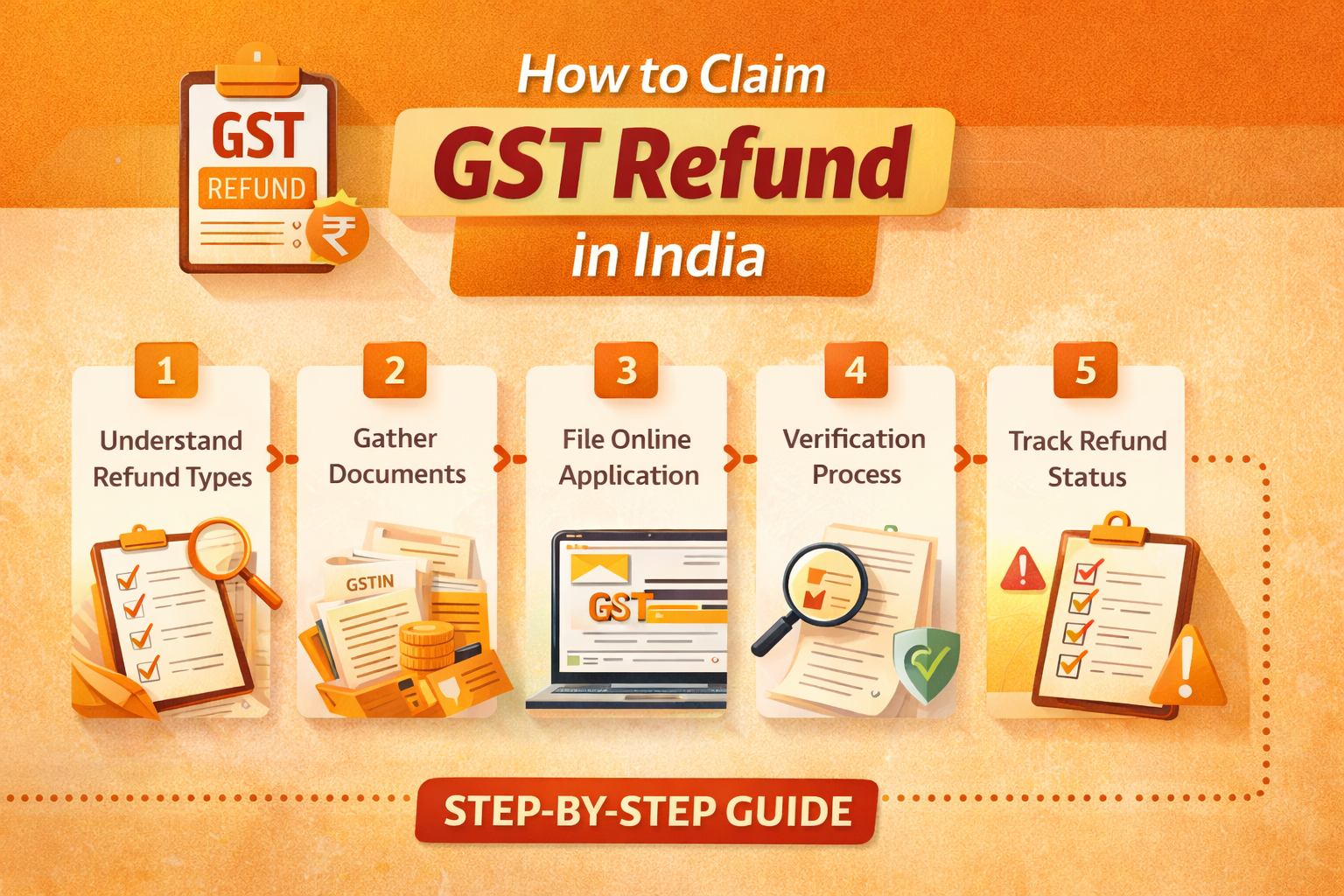
Listen to this Article
How to Claim GST Refund in India: Complete Step-by-Step Guide
Goods and Services Tax (GST) has simplified indirect taxation in India, but claiming a refund can often be confusing for businesses and taxpayers. Whether it’s an export refund, excess payment, or any other type of GST refund, following the correct procedure is essential to avoid delays or rejection. This guide provides a complete, step-by-step process, required documents, common mistakes, and tracking tips for claiming a GST refund in India.
1. Understand the Types of GST Refunds
GST refunds are categorized into different types:
-
Excess Payment Refund: When you have paid more GST than your liability.
-
Export Refund: Refunds on exported goods or services, which are zero-rated under GST.
-
Refund on Input Tax Credit (ITC): When eligible ITC exceeds your output tax liability.
-
Refund for Inverted Duty Structure: If the GST rate on inputs is higher than the output GST rate.
Knowing the type of refund applicable to your situation is the first step in ensuring a smooth claim process.
2. Gather Required Documents
Before filing a GST refund application, make sure you have the following documents ready:
-
GSTIN (GST Identification Number) and registration certificate
-
GST returns (GSTR-1, GSTR-3B, and other relevant forms)
-
Invoice copies and payment receipts
-
Bank account details (for direct refund credit)
-
Refund application form (RFD-01)
Having complete and accurate documentation reduces the risk of delays and rejections.
3. File the Refund Application
GST refunds can be filed online through the GST portal:
-
Log in to your account on the GST portal.
-
Navigate to Services → Refunds → Application for Refund.
-
Select the refund type applicable.
-
Fill out details including tax period, amount, and reason for refund.
-
Attach supporting documents such as invoices, payment proofs, and bank statements.
-
Submit the application digitally.
Once submitted, you will receive an ARN (Application Reference Number) for tracking purposes.
4. Verification Process
After submission, the refund application undergoes verification by the GST department:
-
Officials may ask for additional supporting documents.
-
Refund may be sanctioned partially or fully depending on the verification.
-
If discrepancies are found, a show-cause notice will be issued, and you will have to respond within the stipulated time.
5. Refund Tracking
You can track your refund status online using the ARN:
-
Go to Services → Refunds → Track Application Status.
-
Enter the ARN received after application submission.
-
The portal will display current status: Pending, Under Process, Sanctioned, or Rejected.
Regular monitoring helps avoid delays and ensures prompt action if additional information is requested.
6. Common Mistakes to Avoid
-
Submitting incomplete or incorrect forms
-
Missing invoices or supporting documents
-
Filing for the wrong type of refund
-
Delays in responding to GST department notices
-
Not reconciling ITC claims with GST returns
Avoiding these mistakes ensures a faster and smoother refund process.
7. Timeline for Refund
-
Generally, refunds are processed within 60 days from the date of application submission.
-
In case of disputes or additional verification, the process may take longer.
Conclusion
Claiming a GST refund in India can be straightforward if you follow the correct procedure, maintain proper documentation, and track your application regularly. This step-by-step guide helps taxpayers and businesses understand the process, avoid common errors, and ensure timely refunds.
Category : GST | Comments : 0 | Hits : 164
GST for Freelancers & Consultants
GST for Freelancers & Consultants During recent times we have witnessed a massive rise in the freelance economy with professionals like designers, writers, consultants, etc offering fre...
(This is only for check ) The Goods and Services Tax (GST) framework in India continues to evolve, with the government introducing several important updates aimed at enhancing compliance, improving...
The Goods and Services Tax (GST) Department has recently sent out an advisory to specific GST taxpayers about the first chance given to correct errors in their previously filed GSTR-3B forms. This fa...









Comments