





MOOWR Scheme – Solving Working Capital Problems for Importers
 Print
PrintListen to this Article
0:00
0:00
With a view to promote India as a global manufacturing hub and the commitment towards ease of doing business, CBIC has notified revamped regulation under Customs Law for manufacture and other operations in bonded warehouse - Manufacture and Other Operations in Warehouse (no.2) Regulations, 2019 (hereinafter referred as MOOWR). The government has streamlined the existing provisions for manufacturing goods in a custom bonded warehouse.
Under this scheme, when the raw materials or capital goods are imported, the import duty (both BCD and IGST) on them is deferred. If these imported inputs are utilized for exports, the deferred duty is exempted. Further, in case when the finished goods are cleared to the domestic market, import duty is to be paid on the imported raw materials used in the production. In addition, import duty on capital goods is to be paid when the capital goods are cleared to the domestic market.
The scheme is eligible for the owner of any warehoused goods who carries on any manufacturing process or other operations in relation to such goods. The manufactures can either set up a new manufacturing facility or an existing facility can be converted into a bonded manufacturing facility irrespective of its location in India. The jurisdictional Commissioner of Customs is the single point of contact for all approvals. The applicant is only required to file an integrated application form for obtaining license for a private bonded warehouse and the permission for manufacturing and other operations. Once the license is granted there is no hassle of periodic renewals as its valid till surrender.
Unlike various existing schemes, the MOOWR scheme is not linked to the quantum / obligation of exports or turnover nor there is a requirement to maintain positive NFE (Net Foreign Exchange Earnings) and neither there is restriction on clearance of 100% of goods in domestic market. On account of business impacts on liquidity due to covid, MOOWR is an attractive scheme for maintaining cash flow for the Importers, as goods can remain in warehouse without any time limit and duty will be paid only when the goods are cleared for domestic sale. However, in case, the capital goods are cleared for home consumption after use, the benefit of depreciation is not available. Additionally, the capital goods can also be exported after use, without payment of duty as per Section 69 of the Customs Act, 1962 resulting in duty deferment without any time limitation.
While the scheme looks attractive on the face of it, however it is important for the importers to understand the real benefits that would accrue to them, considering the nature of supplies, business model and various other intricacies. The term other operations used extensively across MOOWR need to be analyzed from various aspects, whether which activities/services can be provided from the premises will be covered.
Further, it is also to be noted that the said scheme was launched by Government of India to ensure WTO compatibility, after panel report of WTO recommended withdrawal of export schemes such as EPCG, EOU’s, Advance Authorization, SEZs etc. However, if India gets relief from the appellate body of WTO, will the Government still look to continue this Scheme (MOOWR) or will make the prior schemes compatible as per WTO norms. Hence, an informed decision by the importers is required to be undertaken.
Please note that the said view is in Individual capacity and not any firms view.
Under this scheme, when the raw materials or capital goods are imported, the import duty (both BCD and IGST) on them is deferred. If these imported inputs are utilized for exports, the deferred duty is exempted. Further, in case when the finished goods are cleared to the domestic market, import duty is to be paid on the imported raw materials used in the production. In addition, import duty on capital goods is to be paid when the capital goods are cleared to the domestic market.
The scheme is eligible for the owner of any warehoused goods who carries on any manufacturing process or other operations in relation to such goods. The manufactures can either set up a new manufacturing facility or an existing facility can be converted into a bonded manufacturing facility irrespective of its location in India. The jurisdictional Commissioner of Customs is the single point of contact for all approvals. The applicant is only required to file an integrated application form for obtaining license for a private bonded warehouse and the permission for manufacturing and other operations. Once the license is granted there is no hassle of periodic renewals as its valid till surrender.
Unlike various existing schemes, the MOOWR scheme is not linked to the quantum / obligation of exports or turnover nor there is a requirement to maintain positive NFE (Net Foreign Exchange Earnings) and neither there is restriction on clearance of 100% of goods in domestic market. On account of business impacts on liquidity due to covid, MOOWR is an attractive scheme for maintaining cash flow for the Importers, as goods can remain in warehouse without any time limit and duty will be paid only when the goods are cleared for domestic sale. However, in case, the capital goods are cleared for home consumption after use, the benefit of depreciation is not available. Additionally, the capital goods can also be exported after use, without payment of duty as per Section 69 of the Customs Act, 1962 resulting in duty deferment without any time limitation.
While the scheme looks attractive on the face of it, however it is important for the importers to understand the real benefits that would accrue to them, considering the nature of supplies, business model and various other intricacies. The term other operations used extensively across MOOWR need to be analyzed from various aspects, whether which activities/services can be provided from the premises will be covered.
Further, it is also to be noted that the said scheme was launched by Government of India to ensure WTO compatibility, after panel report of WTO recommended withdrawal of export schemes such as EPCG, EOU’s, Advance Authorization, SEZs etc. However, if India gets relief from the appellate body of WTO, will the Government still look to continue this Scheme (MOOWR) or will make the prior schemes compatible as per WTO norms. Hence, an informed decision by the importers is required to be undertaken.
Please note that the said view is in Individual capacity and not any firms view.
Ridhima Mehta
Indirect tax expert
ridhimamehta.18@gmail.com
ridhimamehta.18@gmail.com
Category : GST | Comments : 0 | Hits : 1820
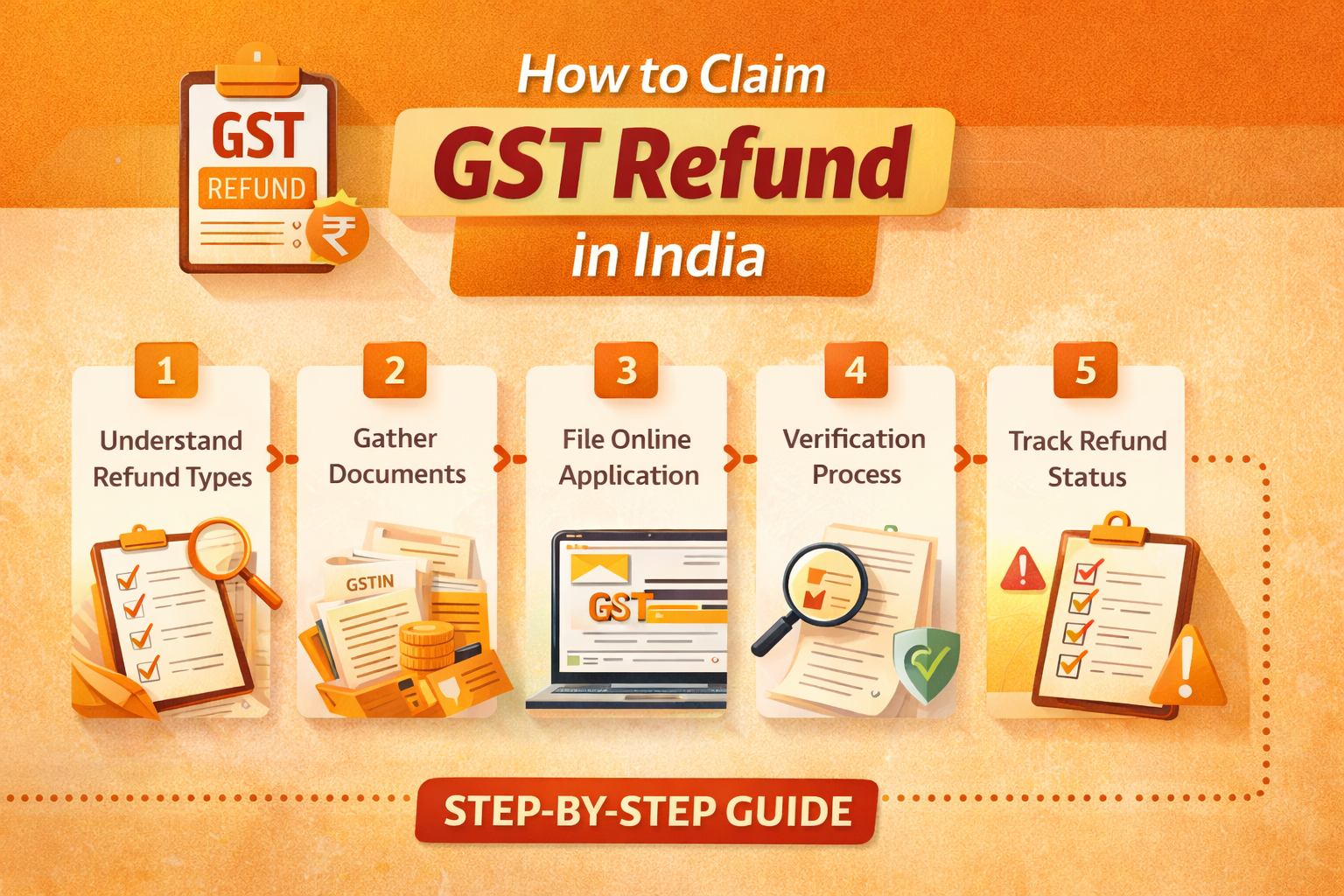
How to Claim GST Refund in India: Complete Step-by-Step Guide Goods and Services Tax (GST) has simplified indirect taxation in India, but claiming a refund can often be confusing for businesses and...
Also Read -
GST for Freelancers & Consultants
GST for Freelancers & Consultants During recent times we have witnessed a massive rise in the freelance economy with professionals like designers, writers, consultants, etc offering fre...
(This is only for check ) The Goods and Services Tax (GST) framework in India continues to evolve, with the government introducing several important updates aimed at enhancing compliance, improving...









Comments